Hawaii is one of the world’s great snorkeling destinations. From Molokini Crater on Maui to Hanauma Bay on Oahu and the Captain Cook Monument on the Big Island, the variety and quality of Hawaiian snorkeling is unmatched in the Pacific. It is also one of the most UV-intense places you can be in the water.
Hawaii sits between 19 and 22 degrees north latitude — close enough to the equator that UV levels are extreme year-round, peaking in summer but remaining high even in winter. Add water reflection, white sand reflection, and the fact that most Hawaiian snorkeling happens between 9am and 1pm, and you have an environment where sun protection is essential rather than optional.
Hawaii’s Sunscreen Laws: What You Need to Know
Hawaii was the first US state to ban sunscreens containing oxybenzone and octinoxate — chemicals shown to damage coral reefs. The ban applies statewide and is enforced at retail level. If you bring chemical sunscreen from home, you may be asked not to use it at protected marine areas.
The practical solution is to use UPF 50+ clothing for maximum body coverage and reef-safe mineral sunscreen (zinc oxide or titanium dioxide) for any exposed skin. This approach is both legally compliant and more effective in the water than any sunscreen alone.
Best Sun Protection for Hawaiian Snorkeling
UPF 50+ Swim Hat With Ear Coverage
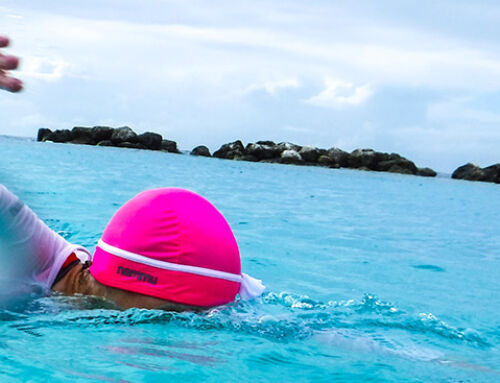
The Nammu EX UV Pro with Ear Flap is the go-to choice for Hawaiian snorkeling. The square back provides extended neck coverage, the ear flaps protect ears from UV, and the secure fit stays on through currents at sites like Hanauma Bay where surge can be strong. It works equally well with traditional snorkel masks and full-face masks.
For face and forehead coverage in addition to neck and ears, the EX UV Pro with Visor and Ear Flap provides the most complete protection available.
UPF Swim Shirt
A UPF 50+ swim shirt is essential for multi-hour snorkeling sessions. Sunscreen washes off in 40 to 80 minutes — a UPF shirt provides continuous protection for as long as you’re in the water. It also means you don’t need to leave the water to reapply.
UV Sun Wrap
Hawaiian boat tours typically involve 30 to 60 minutes of transit time between sites. A UV sun wrap provides full shoulder and torso coverage on deck without overheating. Lightweight and quick-drying, it moves easily from boat to beach to restaurant.
Island-by-Island Snorkeling Notes
Oahu — Hanauma Bay: Shallow reef with strong surge in places. The EX UV Pro with Ear Flap is recommended for the secure fit. Arrive early — the bay has a daily visitor cap.
Maui — Molokini Crater: Boat tour destination with deep water and excellent visibility. Morning sun exposure on the boat to Molokini is significant — wear your swim hat from the moment you board.
Big Island — Kealakekua Bay: One of Hawaii’s best snorkeling spots with excellent coral. Remote location means limited shade — full UPF coverage is essential.
Kauai — Poipu Beach: Sheltered bay popular with families. Shallower water means longer surface time and more UV exposure. Great for kids wearing Classic Nammu hats.
Tips for Snorkeling in Hawaii
- Go early. UV peaks between 10am and 2pm. Early morning sessions at most Hawaiian sites mean calmer water and lower UV.
- Stay in the water longer. With full UPF coverage, you don’t need to exit to reapply sunscreen. More time in the water, less time on the beach getting burned.
- Check the conditions. Hawaiian surf can kick up quickly. Secure swim hat fit matters at exposed sites — the EX UV Pro stays on even when conditions change.
- Respect the reef. Mineral sunscreen and UPF clothing are the most reef-safe sun protection choices available.
Related Posts