For people with eczema, swimming is a complicated relationship. Water — particularly chlorinated pool water and saltwater — can trigger flares, dry out the skin, and irritate areas that are already sensitive. And yet for many people with eczema, swimming is deeply enjoyable and important for physical and mental wellbeing.
The goal is not to avoid the water. The goal is to swim smart — with the right protection and the right aftercare — so that swimming remains a pleasure rather than a source of flare-ups.
How Water Affects Eczema Skin
Eczema-prone skin has a compromised skin barrier, which means it loses moisture more easily and absorbs irritants more readily than typical skin. In the water:
- Chlorine strips natural oils and disrupts the skin barrier, often triggering post-swim dryness and itching
- Saltwater can have a drying effect, particularly on already-compromised skin
- Chemical sunscreens frequently contain fragrances, preservatives, and active ingredients that are common eczema triggers
- Sun exposure itself can trigger flares in some people with eczema, particularly on sensitized skin
The Role of UPF Clothing
UPF 50+ clothing is one of the most effective tools for people with eczema who swim outdoors. It eliminates the need to apply sunscreen to large areas of skin — reducing both the chemical exposure risk and the physical irritation of application. The fabric acts as a physical barrier between the skin and UV radiation without any ingredients that could trigger a reaction.
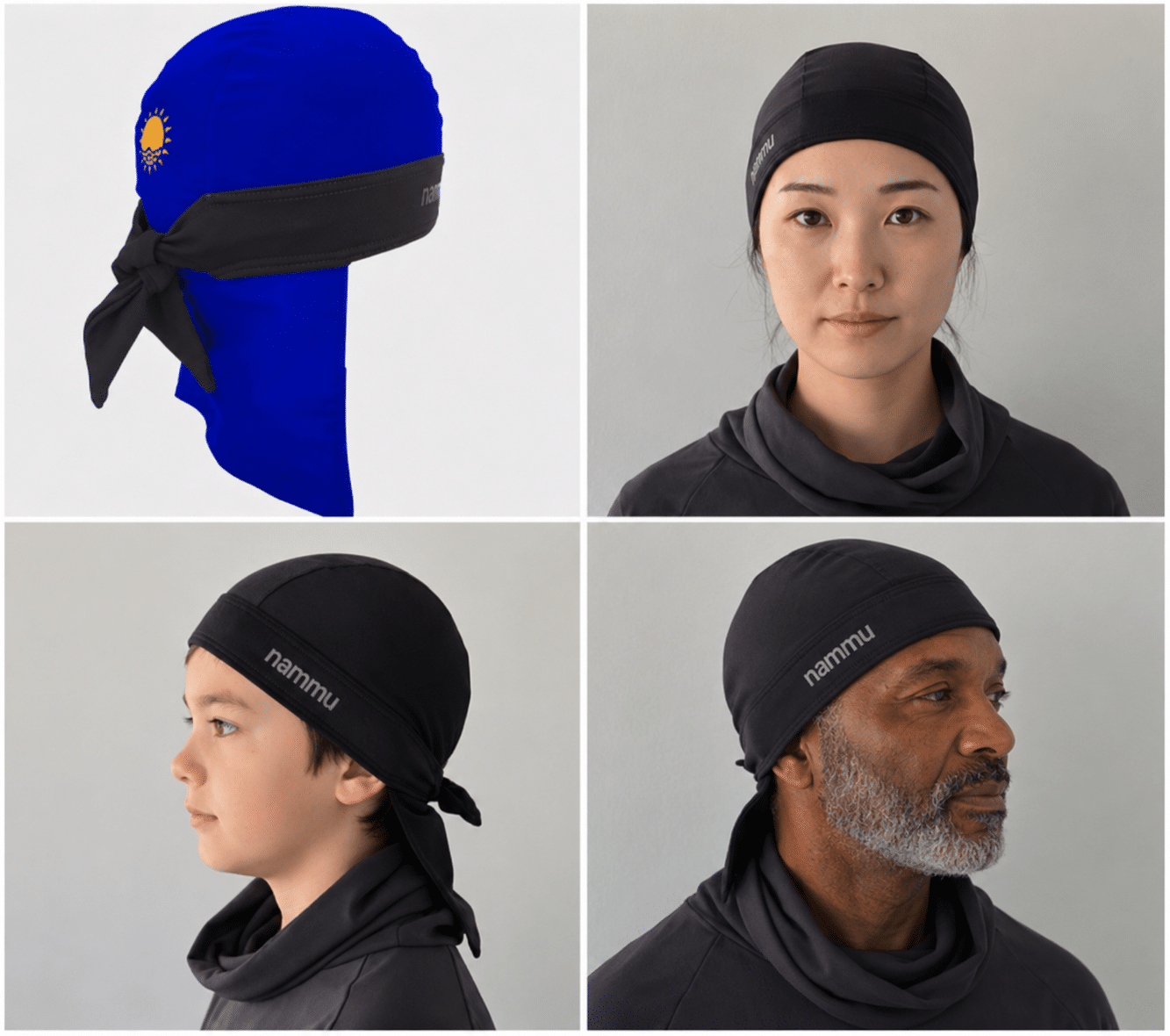
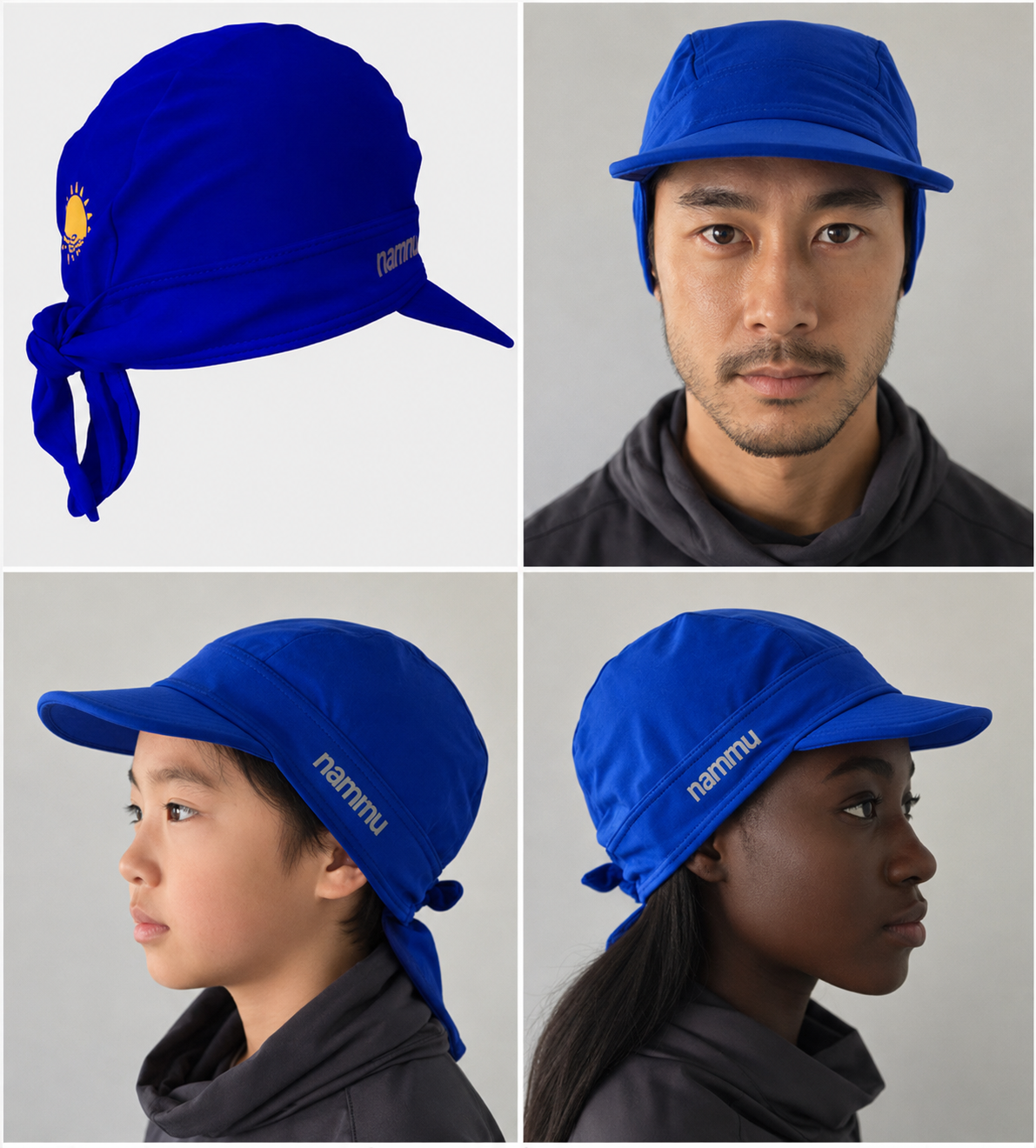
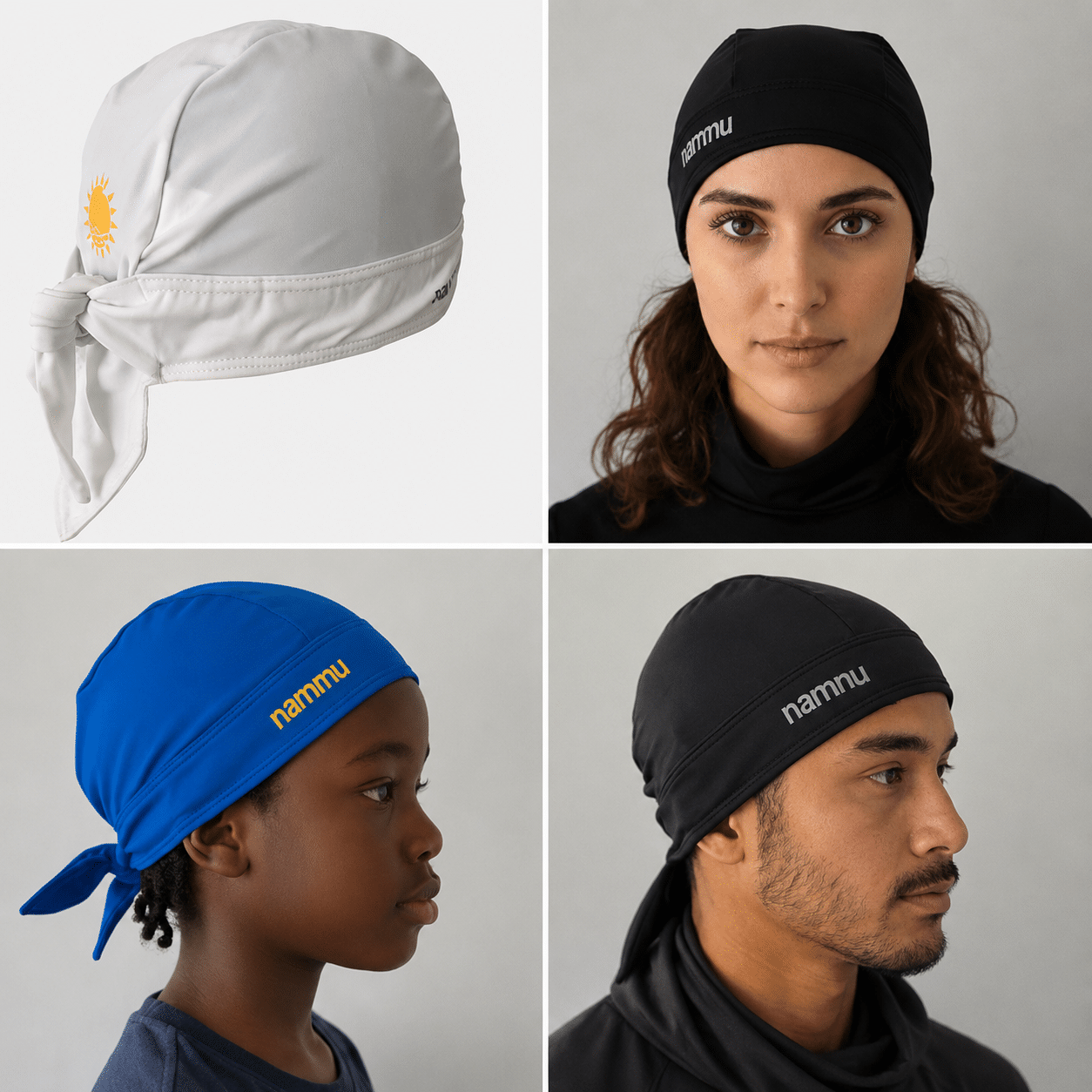
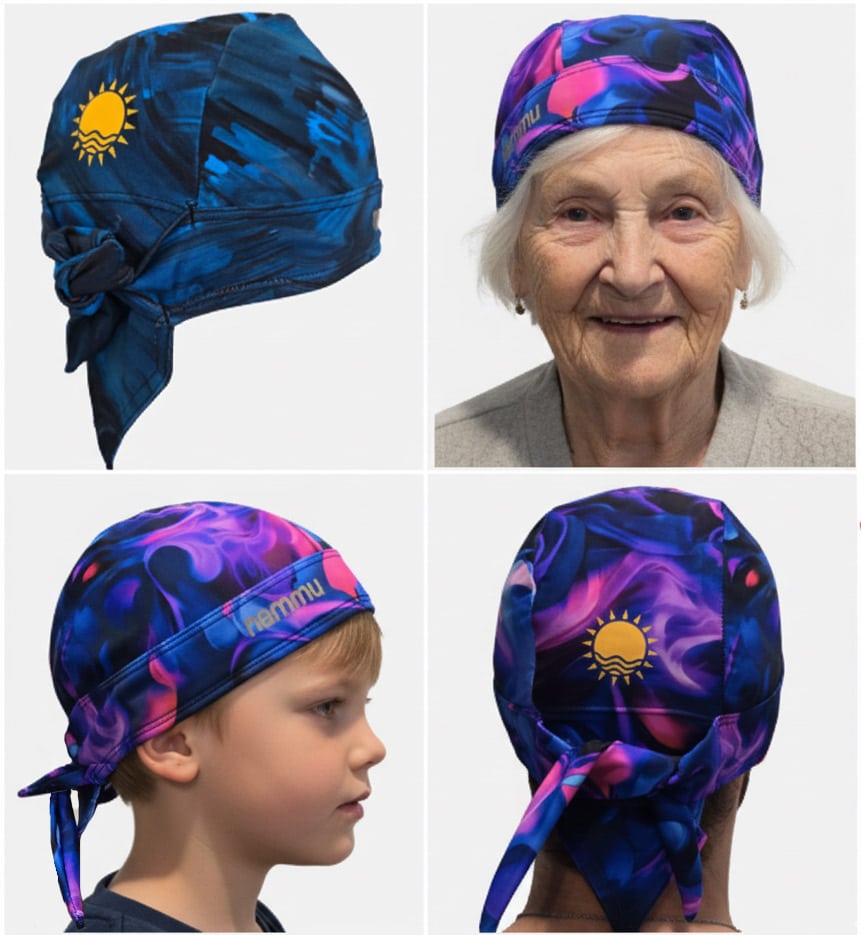
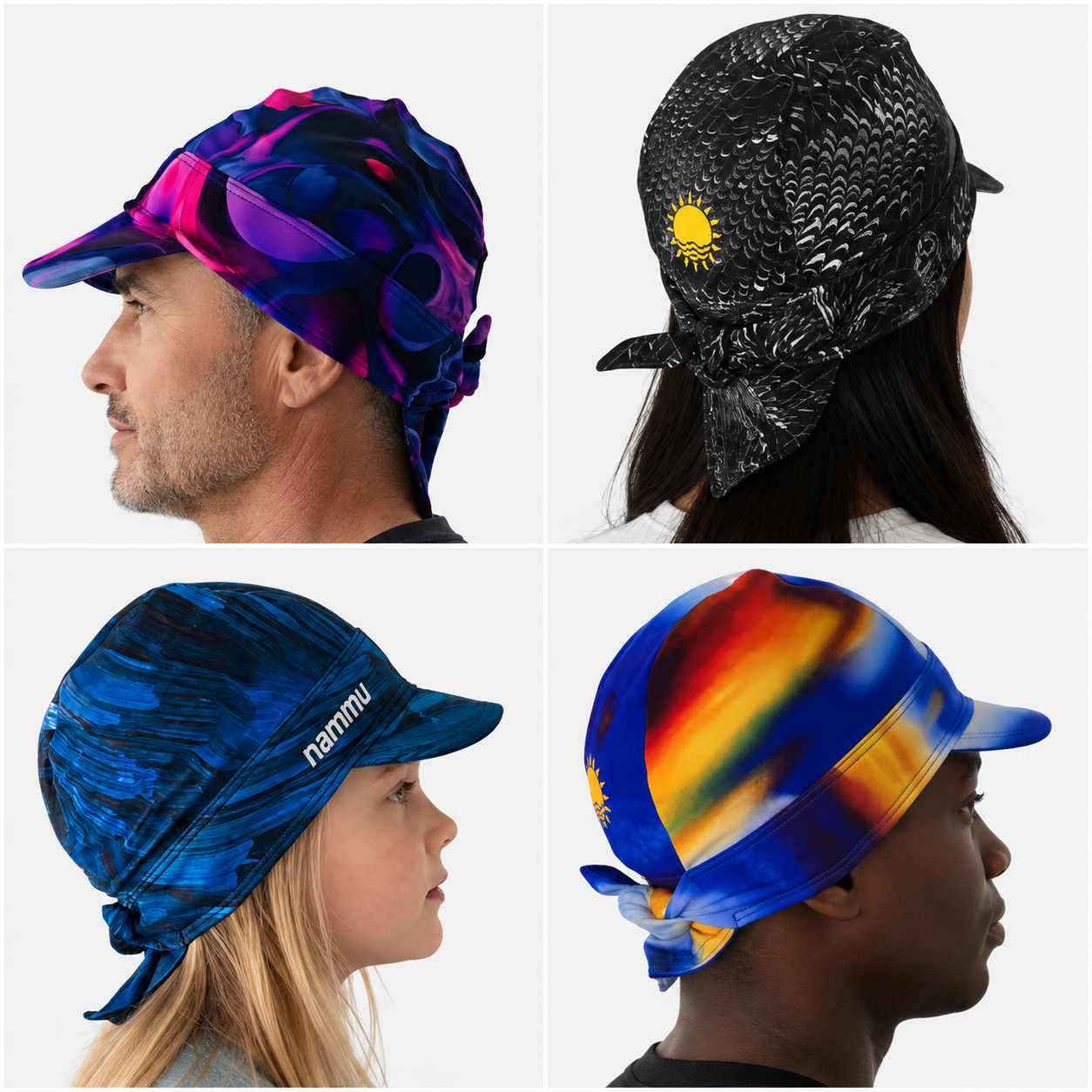
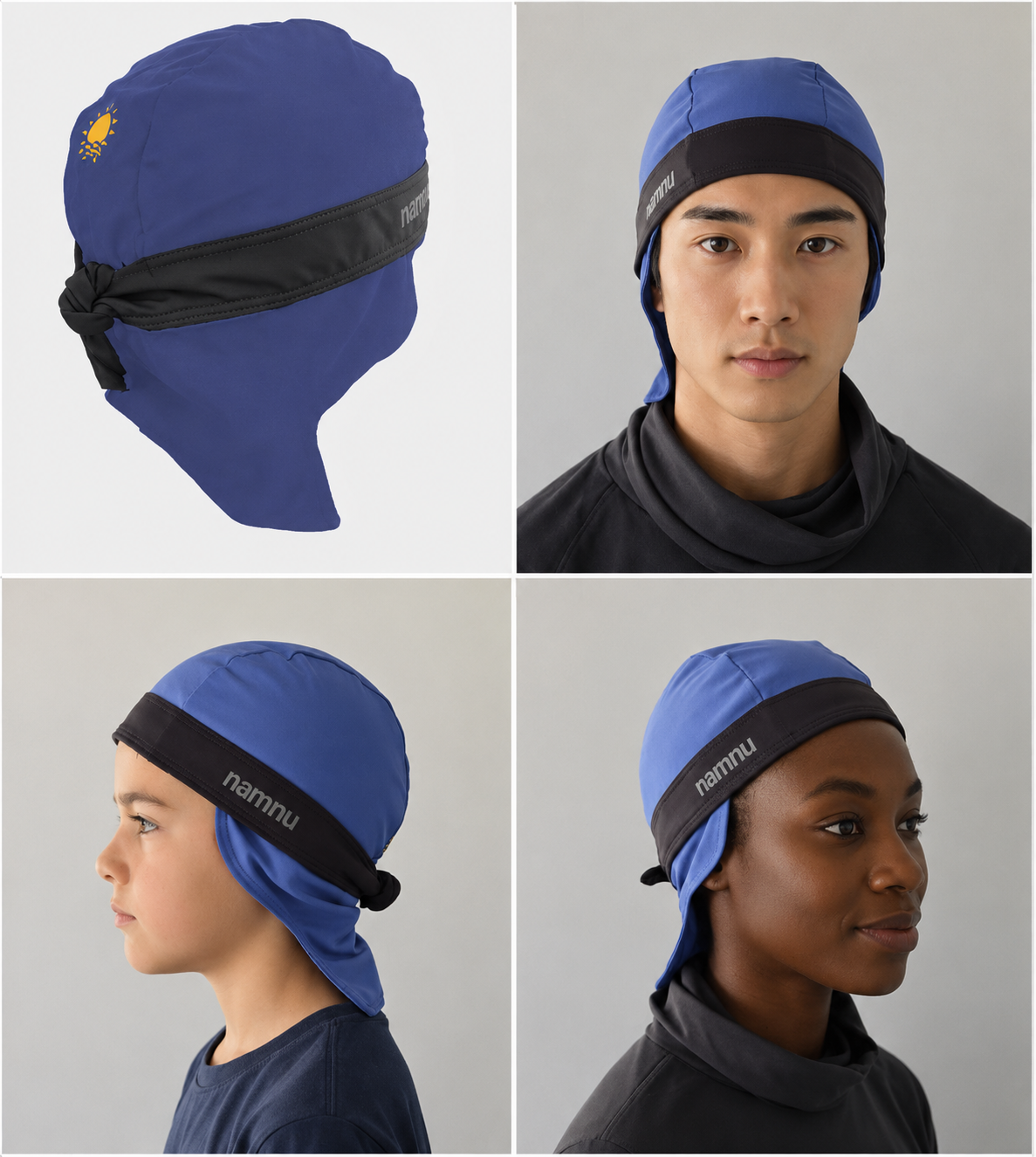
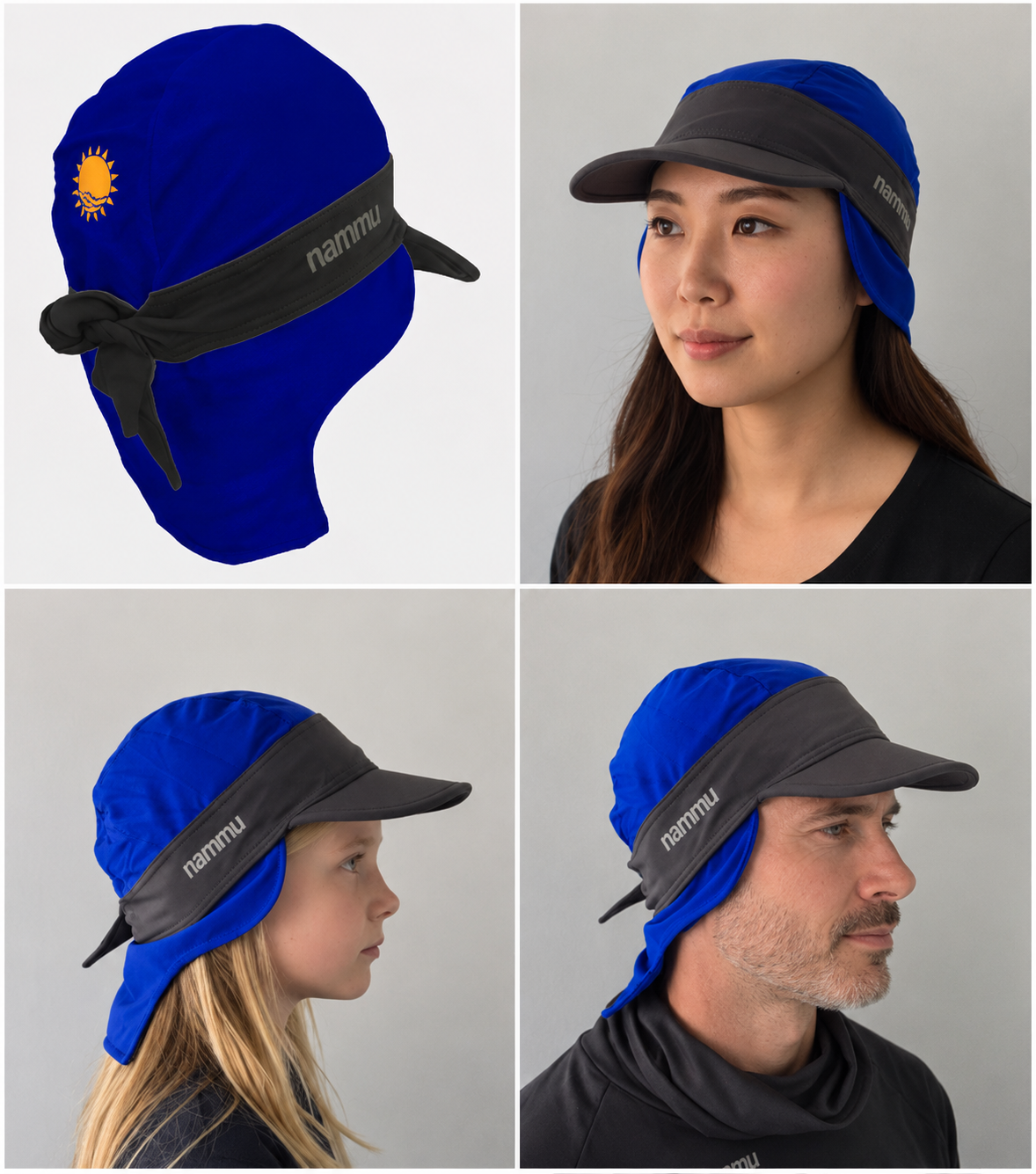
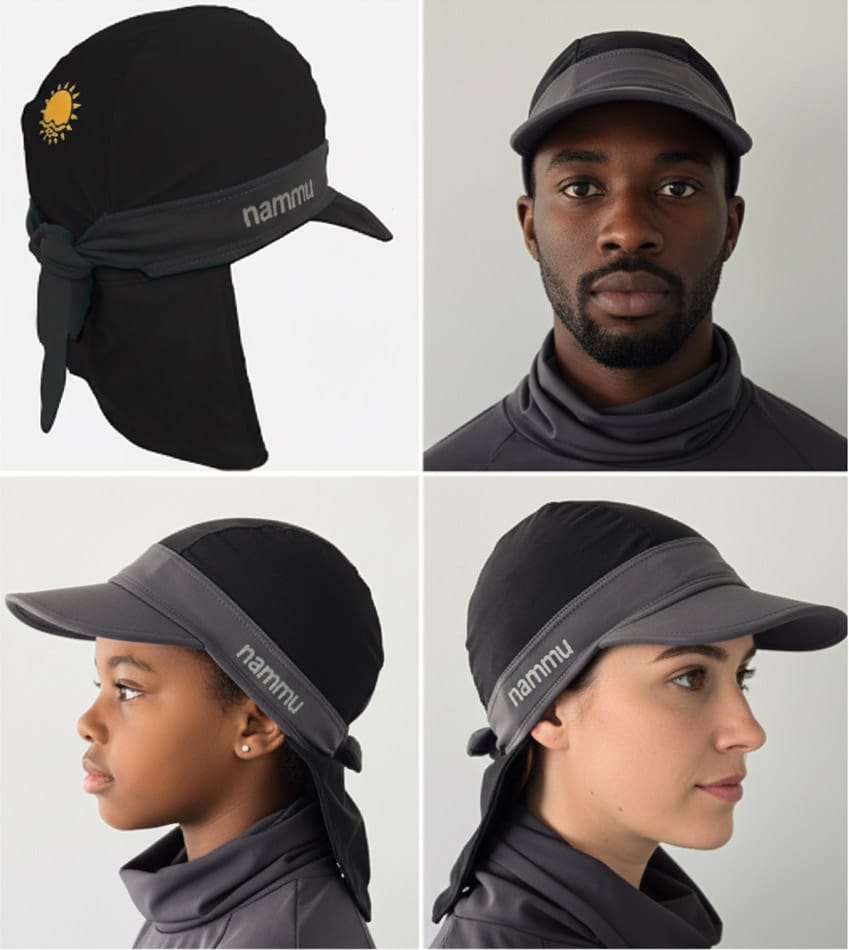
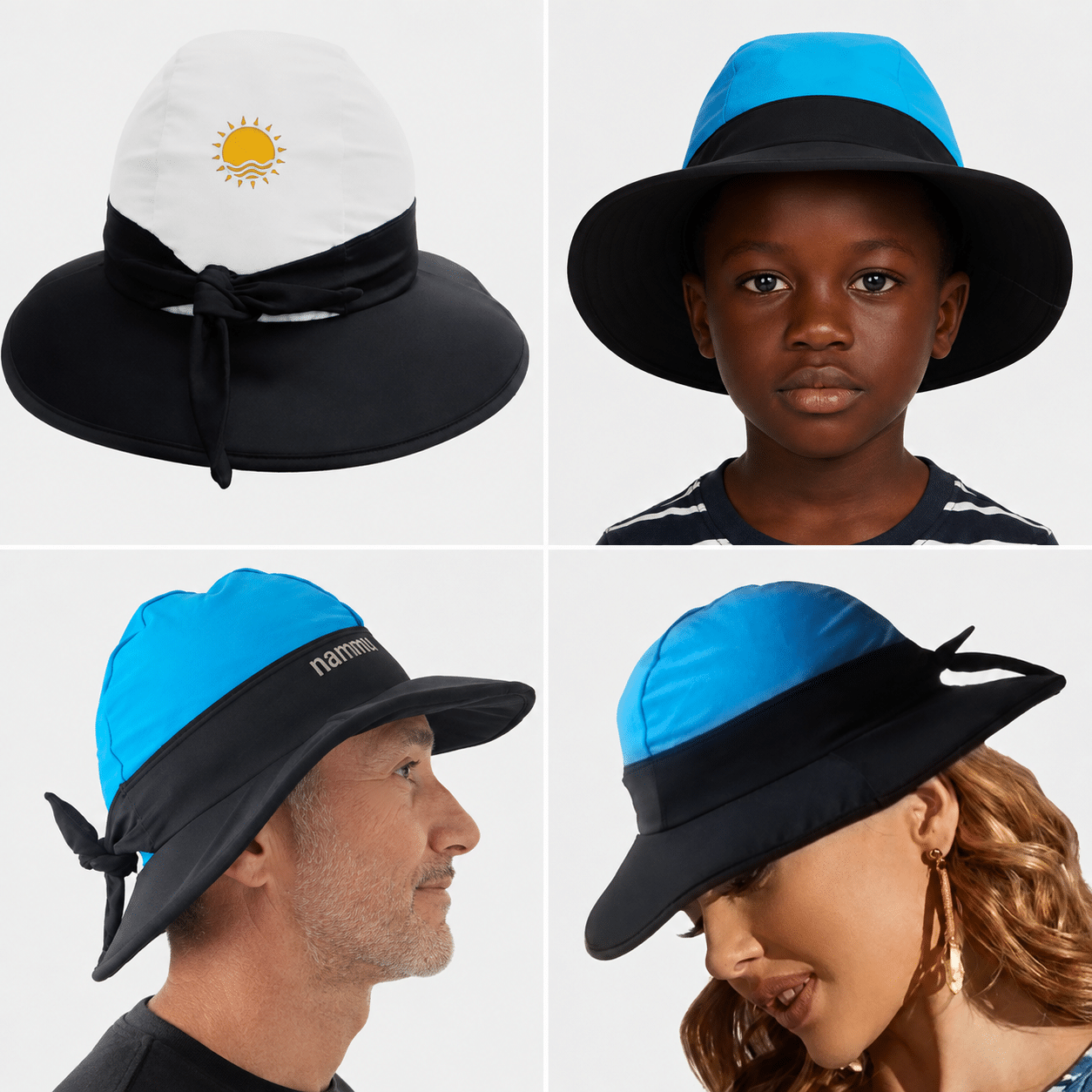
The Nammu swim hat collection is made from 80% nylon and 20% spandex — soft, stretchy, and free from rigid bands or irritating seams. The fabric sits lightly against the scalp and neck without the tight squeezing of a silicone swim cap, which can be particularly uncomfortable on sensitized skin.
The Classic Nammu is the most popular choice for people with eczema — the relaxed fit avoids pressure on the skin, and the quick-dry fabric means less prolonged moisture contact after swimming.
What to Wear
Swim hat: Choose a soft, non-tight option. The Classic Nammu or Classic with Visor sit comfortably without pressure. Avoid tight latex or silicone options that can irritate sensitized scalp skin.
Swim shirt: A UPF 50+ swim shirt covers the torso and arms without sunscreen contact on skin that may be reactive. Nylon-spandex fabric is generally well tolerated by eczema skin — rinse thoroughly with fresh water after swimming.
Sun wrap: A UV sun wrap provides coverage between swims without the need to reapply sunscreen to irritated areas.
Sunscreen: For any exposed skin, choose a fragrance-free, hypoallergenic mineral sunscreen. Zinc oxide formulas are generally the safest choice for eczema-prone skin.
Before and After Swimming
- Before: Apply a thick, fragrance-free moisturizer as a barrier before entering the water. Some dermatologists recommend applying emollient before swimming to reduce chlorine absorption.
- After: Rinse immediately with fresh water to remove chlorine or salt. Pat dry gently and apply moisturizer while skin is still slightly damp to lock in hydration.
- Timing: Swim in the morning or late afternoon when UV is lower, reducing the sun exposure your skin needs to manage alongside the water exposure.
Swimming with eczema is absolutely possible. With the right protection before, during, and after, it can remain one of the most enjoyable and therapeutic activities in your routine.
Frequently Asked Questions
How does swimming affect eczema-prone skin? Chlorine and saltwater can strip natural oils and dry out the skin, and chemical sunscreens often contain fragrances or ingredients that trigger flares.
Why is UPF clothing helpful for people with eczema who swim? It provides UV protection without any sunscreen ingredients that could irritate sensitized skin, reducing both chemical exposure and application-related irritation.
What makes the Nammu fabric suitable for sensitive skin? It’s made from soft 80% nylon and 20% spandex with no rigid bands or irritating seams, sitting lightly against the scalp and neck.
Related Posts