Vitiligo affects around 1% of the global population — people of all ages, ethnicities, and backgrounds. While vitiligo is primarily a cosmetic condition, it creates a very real and practical challenge when it comes to sun protection: depigmented skin patches lack melanin, the body’s natural UV defence, making them significantly more vulnerable to sunburn and UV damage.
In and around water, this challenge is amplified. Water reflects UV radiation, increasing exposure intensity. Sunscreen washes off. And the areas most commonly affected by vitiligo — the face, neck, hands, and scalp — are also the areas most exposed to sun during swimming and snorkeling.
Why Vitiligo Skin Needs Extra UV Protection
Melanin in the skin absorbs UV radiation and converts it to harmless heat — it’s the body’s primary sun defence mechanism. Depigmented patches of skin have little or no melanin, which means they burn significantly faster than surrounding skin and are more vulnerable to cumulative UV damage over time.
People with vitiligo on the scalp or the back of the neck face a particular challenge when swimming — these areas face directly upward toward the sun, and water reflection doubles UV intensity from below.
The Case for UPF Clothing in Water
UPF 50+ fabric provides a physical UV barrier that does not wash off, does not require reapplication, and does not contain any ingredients that could irritate sensitive skin. For people with vitiligo who swim regularly, UPF clothing is the most reliable and low-maintenance form of sun protection available.
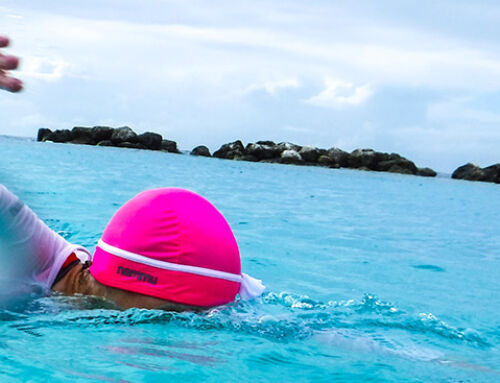
A UPF 50+ swim hat covers the scalp and neck — two areas where vitiligo patches are common and where sunscreen is difficult to apply thoroughly, particularly on a shaved head or in areas of hair loss that sometimes accompany vitiligo.
The Classic Nammu has a relaxed fit that sits comfortably without pressure, making it suitable for extended wear. For those who want additional face coverage, the Classic with Visor adds a flexible brim for forehead shade.
Full Protection Kit for Vitiligo Swimmers
Swim hat: Classic Nammu or EX UV Pro with Ear Flap for snorkeling and active water sports. Covers scalp, neck, and ears.
Swim shirt: A UPF 50+ swim shirt covers the torso, shoulders, and arms — areas where vitiligo patches are common. Provides continuous protection regardless of time in the water.
Sun wrap: A UV sun wrap covers the shoulders and upper body between swims, on the beach, or on the boat between snorkeling sites.
Mineral sunscreen: For any remaining exposed skin — face, hands, lower legs — use a broad-spectrum mineral sunscreen (SPF 50+) with zinc oxide. Reapply every 40 minutes in the water or immediately after towelling off.
Practical Tips
- Identify your highest-risk patches. Vitiligo patches on the scalp, face, and back of the hands tend to be the hardest to protect with sunscreen alone. Prioritise UPF clothing for these areas.
- Swim in the morning or late afternoon. UV intensity is significantly lower outside of the 10am to 2pm peak window.
- Check the UV index before going out. On high UV days (8+), reduce time in direct sun even with full UPF coverage.
- Carry a wide-brim hat for out-of-water time. A Nammu swim hat works in the water; a wide-brim sun hat provides additional face and neck shade on the beach or at poolside.
Vitiligo doesn’t have to limit time in the water. With the right gear and the right habits, swimming and snorkeling can remain a full part of an active outdoor life.
Related Posts